Annual reports. Who’s actually reading?

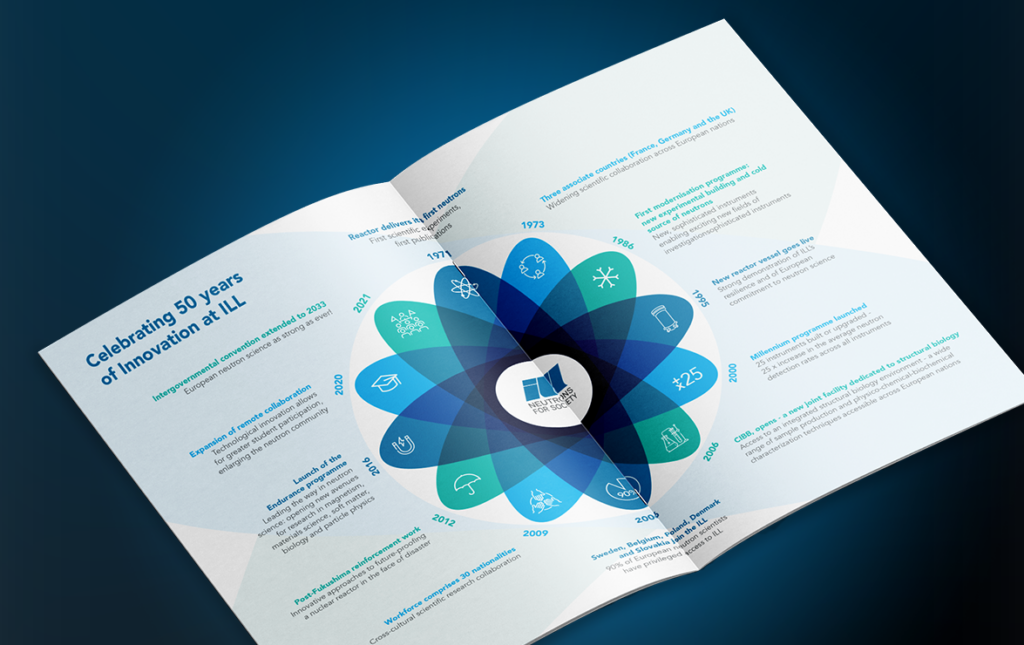
Ask a company who its annual report is for, and the answer rarely varies: investors and regulators. It is a fair answer. The report has to meet disclosure requirements, satisfy the auditors and give shareholders a clear account of the year.
But in healthcare, technology and life sciences, they are far from the only people reading it. Find out who else is turning the pages, and how to plan your next report with them in mind.
Your report has more readers than you realise
A procurement manager at an NHS trust checks your sustainability report before shortlisting you. A business development lead at a pharma company reads your strategic report before a partnering call. A job candidate looks through it before deciding whether to accept an interview.
Each reader wants something different:
- Investors and analysts: is the strategy credible, and is the business delivering on it?
- Customers and procurement teams: is this a stable, responsible supplier that meets our standards?
- Partners and licensees: is the science sound, and is the company run well and fully funded?
- Prospective employees: where is the company heading, and is it a good place to build a career?
- Current employees: how is the business doing, and where does my work fit?
- ESG raters: what is disclosed, and how does it compare with peers?
Few of them read from cover to cover. They search, skim and go straight to the section that answers their question.
Sustainability reports face the same problem
Many sustainability reports are written mainly for ESG raters. They end up organised around reporting frameworks rather than around what the business does.
Yet some of their most important readers are commercial. Large healthcare buyers, including the NHS, and global pharma companies increasingly ask suppliers for carbon reduction plans and evidence of wider sustainability performance. The people assessing those submissions want clear targets, credible progress and data they can find in seconds. Early-career scientists and engineers read them too, to judge whether a company’s values match their own.
Written with these readers in mind, a sustainability report can support sales and recruitment as well as ratings. It also needs to be specific. Vague or overstated environmental claims are drawing closer scrutiny from regulators, customers and the public.
Decide who matters most this year
A report cannot serve every reader equally. Try, and it usually ends up serving none of them well.
Start with the business plan. The readers who matter most are the ones whose decisions will shape whether that plan succeeds. A clinical-stage biotech heading into a partnering deal needs prospective partners to come away confident about the science, the team and the funding runway. A medtech company bidding for NHS contracts needs its sustainability and quality credentials to be easy to find and easy to verify. A software company scaling its engineering team needs candidates to understand the product direction and the culture.
Investors and regulators remain essential in each instance. The question is which two or three other audiences the report should also be written for. Make sure you agree that with the leadership team before anyone starts drafting.
Four ways to write for the readers who matter
- Structure: readers who skim need to find their section fast. Clear signposting, a strong overview at the front and self-contained sections on topics such as the pipeline, people and sustainability make the report far easier to use.
- Language: explain the science in plain English. A clear description of a mechanism of action, a diagnostic platform or software architecture helps generalist investors, procurement teams and candidates alike, without losing accuracy.
- Evidence: partners and buyers look for proof. Specific milestones, measurable targets and progress against last year’s commitments carry far more weight than broad statements of ambition.
- Format: most readers first see your report on a screen, often a phone, and some only ever see an extract. A well-structured online version, a short summary and separate data packs will serve them better than one long PDF.
Put the report in front of them
Investors know where to find your investor relations page. A procurement manager or a prospective hire may only see your report if someone puts it in front of them.
So you need to think ahead. Bid teams can use the sustainability and quality sections in tender responses. Business development can draw on the pipeline and technology sections for partnering materials. HR can use the strategy, culture and people content on careers pages and in onboarding. Your website, email and social channels can point each audience to the parts that matter to them.
Because the content has already been verified and signed off, every team can use it with confidence, and the company tells one consistent story to every audience.
A quick checklist before drafting starts
- Have we agreed which readers, beyond investors and regulators, matter most this year?
- Do we know what each of those readers needs to find, and can they find it in under a minute?
- Would a non-specialist understand how our science or technology works?
- Are our sustainability claims specific, measurable and backed by data?
- Do our sales, partnering and HR teams know how they will use the report once it is published?
This isn’t just theory
We took this approach with the Royal Historical Society, the UK’s largest membership organisation for historians. Alongside an interactive report for its members and for journalists, we created an infographic summarising key data, a slide deck for meetings and conferences, and visual assets for LinkedIn and X. Each piece drew on the same approved content, tailored for a different reader. Read the full case study.
At Sciad, we help companies shape the narrative and key messages behind their annual and sustainability reports. We write and produce these alongside supporting marketing assets , and plan how they are used as part of a wider communications strategy.
If you are starting to plan your next annual or sustainability report and want to talk about who it needs to reach, I’d be happy to chat: stephen@sciad.com


Got an innovation you need bringing to life?
We’d love to hear from you! Head to our contact page to start a conversation.