Lab Innovations 2026: the laboratory’s next breakthrough is colLABoration

“The most important changes in laboratories emerge when good science, capable people, reliable data and practical technology begin working together differently”.
This is the context for Lab Innovations 2026, taking place on 4th & 5th November at the NEC, Birmingham. The Sciad team will be liaising with the media and putting journalists in touch with speakers, throughout the two day event.
At a time when laboratories are expected to accelerate discovery, uphold ever-higher standards of quality, reduce environmental impact and make better use of constrained resources, the event will bring the sector together around a timely proposition: the future of science will be built collaboratively.
This is not simply a question of making laboratories more digital, greener or more productive in isolation. It is about making them all three, without compromising the rigour, traceability and human judgement on which trusted science depends.
The Lab Innovations’ programme brings this challenge into focus through sustainability, AI and automation, quality and compliance, biotechnology, applied innovation and professional development. The themes are interdependent. A laboratory cannot take full advantage of AI without structured, accessible data; automation will not deliver its potential if teams lack the skills to validate and manage it; and sustainability will struggle to move beyond good intentions unless it is built into procurement, workflows and equipment choices.
The laboratory of the future will be defined not by the number of robots it contains, but by how effectively its technologies, systems and people connect.
AI needs good science, not just good algorithms
AI has moved from speculative promise to national priority. The UK’s AI for Science Strategy puts the spotlight on accelerating discovery across areas including advanced materials, medical research, engineering biology, fusion energy and quantum technologies. Yet its underlying message is especially relevant to laboratory professionals: progress depends on high-quality data, appropriate computing infrastructure and people with the confidence to work across scientific and digital disciplines.
The most useful question for laboratories is therefore not, “Will AI transform science?” but, “What must be in place for AI to improve our science?” This is something that Maya Carlyle, AI Assurance and Governance Leader at National Physical Laboratory (NPL) spoke to in a presentation at the 2025 edition of the event and will explore further in an upcoming AI industry report in partnership with Lab Innovations.
In practice, this sentiment returns attention to laboratory fundamentals. Data needs to be structured, secure and governed. Workflows should be understood before they are automated. Results must remain explainable, reproducible and subject to expert scrutiny – particularly in regulated environments, where speed has little value if trust is diminished.
For many laboratories, the immediate opportunity is not necessarily a fully autonomous facility. It is better-connected operations: fewer manual handovers, clearer sample traceability, faster access to instrument data and less time lost to spreadsheets, disconnected software and routine administration. Exhibitors including CloudLIMS, Mettler Toledo and Collaborative Drug Discovery will demonstrate how laboratory informatics can centralise sample and processing data, strengthen traceability and support compliance, while Agilent Technologies, Gilson and Applied Scientific Technologies will bring expertise in robotics, automated control systems and laboratory integration.
This is where the event’s practical emphasis matters. Lab Innovations’ conference programme is designed around real-world case studies, honest lessons learnt and implementation advice, not technology for technology’s sake.
Sustainable laboratories are designed, not declared
Sustainability is also becoming a more mature conversation. Laboratories have an essential role in developing the medicines, diagnostics, materials and processes needed for a lower-carbon economy. Yet they must also address their own consumption of energy, water, plastics, chemicals and other finite resources.
The next stage is operational design, which means asking more searching questions: can experiments be planned to avoid repeat work? Is cold storage being managed efficiently? Can stock control prevent materials from expiring unused? Are laboratory consumables and packaging being considered over their full lifecycle? How can suppliers make the lower-impact choice easier to adopt without asking laboratories to compromise performance, safety or reliability?
The Future of Laboratories Stage, sponsored by My Green Lab, will place these questions at the centre of its content, offering laboratory professionals practical insight into reducing waste, improving energy efficiency and implementing greener practices. Robotics and automation will also feature heavily in the Royal Society of Chemistry Stage – a useful reminder that sustainability and technology should reinforce one another.
That link is visible across the exhibitor floor. Alpha Laboratories, for example, will showcase both core laboratory consumables and its focus on renewable energy, recycling and lower-impact product options, including its LaboraTree initiative. Applied Thermal Control will bring UK-manufactured, low-global-warming-potential cooling solutions designed to reduce energy and water waste without sacrificing precise temperature control. Scientific Laboratory Supplies will bring several worldwide brands to its pavilion stand, with their Gold EcoVadis rating showcasing their commitment to sustainable practices across the business.
The real test of sustainable science is whether it becomes embedded in everyday practice. The strongest solutions will be those that make the sustainable option the efficient, reliable and intuitive choice as well. This is something that Sustainable Lab partner, Green Light Laboratories, will explore in their hands-on feature with over 15 case studies, and a clinic with UKRI available on their stand.
Quality is the enabler of innovation
There is often a false choice made between innovation and compliance, as if one accelerates progress while the other inhibits it. In reality, quality is what allows innovation to travel beyond the pilot stage.
As supply chains become more complex and laboratory data moves between more platforms, confidence is a strategic asset. Laboratories need assurance that their materials are dependable, measurements traceable, processes robust and records capable of standing up to scrutiny. This matters in every setting, but especially where results can influence patient outcomes, product safety, environmental monitoring or industrial performance.
Lab Innovations will explore quality, compliance and risk management as central components of laboratory resilience. On the event floor, the breadth of this challenge will be represented by organisations ranging from Adam Equipment, a UK manufacturer of laboratory balances, to ASECOS, which specialises in fire-resistant storage for hazardous materials, chemicals and lithium batteries.
The broader challenges around quality and safety will be explored across both days in the Quality Infrastructure Forum, held in partnership with United Kingdom Accreditation Service (UKAS) and NPL.
Quality should not be viewed as the final gate that innovation must pass through. It is the framework that helps laboratories evaluate new approaches responsibly and scale them with confidence.
The skills question is really a leadership question
Technology may change laboratory work, but people remain at the centre of discovery. The sector needs technical excellence, digital fluency, data literacy and a deeper appreciation of quality and sustainability. Meeting that need will require more than recruitment: it calls for visible career pathways, continuous development and meaningful partnerships between laboratories, suppliers, professional bodies and education providers.
This is a leadership issue. Organisations that see skills as core infrastructure, rather than an optional extra once equipment has been purchased, will be better placed to adopt new technologies safely and effectively.
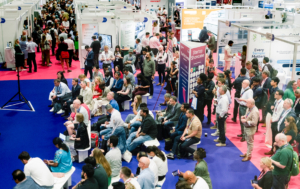
The free-to-attend conference will bring together more than 60 speakers across five stages, creating a setting for that exchange of expertise across laboratory operations, biotechnology, sustainability, quality and automation.
Already announced for the Royal Society of Chemistry Stage are keynote speakers Timandra Harkness, writer and broadcaster on science, technology and society, and Dr Chris Smith, broadcaster, clinician and founder of The Naked Scientists. Their participation reflects a wider need for science to remain connected not only to technical progress, but also to public understanding, evidence and thoughtful debate.
Recognising progress in the laboratory community
The event will also celebrate the people and organisations translating these ambitions into tangible progress. The Lab Awards recognise achievements across suppliers, SMEs, academia, laboratories and individuals. The 2026 ceremony will take place in the Future of Laboratories Stage on 4 November at 3:30pm.
Recognition matters because it makes progress visible. Whether the achievement is a sustainable product innovation, a more effective laboratory process, outstanding technical leadership or a rising star making an early impact, the Awards help highlight the work that strengthens the entire laboratory ecosystem.
About Lab Innovations
Lab Innovations has fast become the UK’s must-attend event for the entire laboratory industry. Supported by some of the UK’s top science institutions, it is a key event for powering the business of science.
The show floor is bursting with innovations from more than 200 leading scientific suppliers and manufacturers showcasing the latest laboratory developments and equipment. Exhibitors present the most cutting-edge technology applicable to a plethora of industries including life sciences, pharmaceuticals, academia, healthcare, chemical, food & drink, cleanroom and more.
To Register:
https://register.visitcloud.com/survey/1cipf65f1hdn9/?actioncode=7099
Media Enquiries:
Paula Burton
Email: paula@sciad.com
REF: LAB282/07/26
Got an innovation you need bringing to life?
We’d love to hear from you! Head to our contact page to start a conversation.